
Five Years of Championing Social Science Integration - What Do We Have to Show For It?
December 17, 2025
By Hollis Jones and Rachael Klopfenstein
What is Social Science?
The social sciences, including economics, political science, public administration, psychology, and more, vary in their methods, data types, and analyses, but ultimately all aim to understand people. By understanding how people interact with their environments, the social sciences can help answer questions related to ways in which human and natural systems influence the outcomes of environmental policy and natural resource management. Questions like: What incentives are most effective for reducing water use during a drought? Who do people trust most to deliver information about invasive species management? How can we increase the number of homes with flood insurance?
In 2020, a panel of social scientists from across the country provided a roadmap and motivation for increasing social science in the Sacramento-San Joaquin Delta. Five years later, we’re asking — “What do we have to show for it?”
Humans are a central part of the Delta system. A truly resilient Delta that supports a reliable statewide water supply and healthy ecosystems — as well as thriving communities — must understand 1) the people who live, work, and recreate in and around the estuary, 2) how the region impacts their health and well-being, and 3) how their behavior influences environmental issues. The social sciences can help us design management approaches that earn trust, reflect shared values, and advance equity.
From “Sparse and Sporadic” to Sustained
In 2017, the Delta Independent Science Board (Delta ISB) published a review that described social science in the Delta as “sparse and sporadic” (Delta ISB, 2017). In response to this report, the Delta Science Program convened a six-person independent Social Science Task Force to assess the state of social science in the Delta. The resulting 2020 report offered recommendations for the holistic integration of the social sciences into Delta science and decision-making, focusing heavily on building capacity and utilizing social science for Delta management.
This guidance sparked several new efforts from the Council to build capacity for social science. Actions since then include:
- Funding a Social Science Extension Specialist with California Sea Grant to conduct specialized research and outreach on the human dimensions of water and environmental management and policy in the Delta.
- Supporting the Bay-Delta Social Science Community of Practice (CoP), a community of social science scholars, practitioners, and allies who are committed to advancing applicable and relevant research on the human dimensions of the San Francisco Bay and Delta.
- Cultivating and coordinating an internal Council staff social science integration team to identify opportunities for and support the integration of social science approaches in the agency’s science, planning, communication, and public participation activities.
These investments over the past five years have boosted social science capacity and provided a much-needed foundation for advancing our understanding of the human dimensions in the Delta, including by way of:
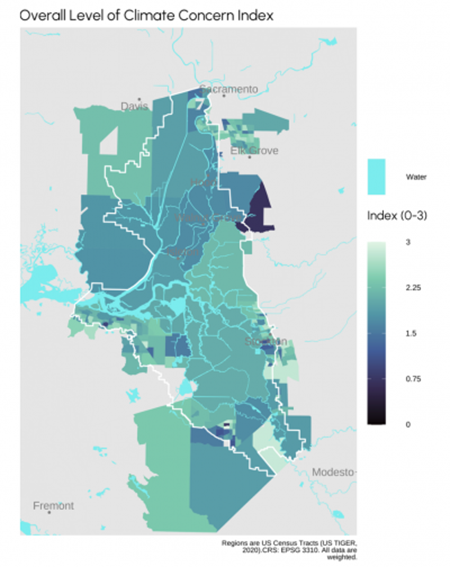
The 2023 Delta Residents Survey resulted in spatially explicit maps of data related to well-being. This map shows the overall level of climate concern. Lighter colors indicate higher levels of concern. By understanding that the Delta is not a homogeneous community, we can tailor climate change adaptation policies and outreach for the best chances of success. (Rudnick et al. 2023)
- Administering the first-ever Delta Residents Survey in 2023 to collect representative data on social and environmental well-being from over 2,200 households in the Delta and adjacent areas, highlighting shared values, diverse experiences, and insights that can inform more effective and equitable communication, outreach, and planning.
- Restructuring research funding calls such as the Delta Research Awards and Delta Science Fellows Program, to explicitly promote research on human dimensions.
- Illuminating practical entry points for non-social scientists to work with social science data and scientists in the draft 2026 Delta Science Plan resource entitled “Making Science Whole: Embedding Social Science in Natural Science Workflows.”
- Integrating tribal and environmental justice perspectives into the Council’s work, products, and initiatives (Tribal and Environmental Justice Issue Paper and Delta Adaptation Plan) by using social science techniques such as interviews with community-based and tribally serving organizations.
While the Council remains a champion and leader in integrating social science, efforts across the region underscore a growing systemwide recognition of its importance, such as the interdisciplinary COEQWAL project, the Delta Protection Commission’s Socioeconomic Indicators Report, and the Wetland Regional Monitoring Program’s People and Wetlands Work Group.
Spotlight: The Social Science Extension Specialist
Dr. Tara Pozzi, Social Science Extension Specialist
One of the biggest boosts to social science capacity in the Delta has been the work of the Social Science Extension Specialist. The first, Dr. Jessica Rudnick, started in 2020 and was instrumental in launching the Delta Residents Survey and building the Community of Practice. Her successor, Dr. Tara Pozzi, started in August 2025 after completing her PhD at the University of California, Davis. Dr. Pozzi is no stranger to the topic or the region — during her 2022-2024 Delta Science Fellowship, she assessed the needs of the adaptation governance system to address climate impacts facing the Delta (see: The Governance of Climate Adaptation in the California Delta). Through interviews and a survey, she identified key governance challenges (e.g., insufficient financial resources, competing priorities) and strategies (e.g., resource-sharing networks, regional coordination) for improving interorganizational collaboration in adaptation planning and implementation. This research informed the Council’s two-part climate initiative, Delta Adapts, and is a clear example of how investing in social science can directly inform policy.
In her new capacity, Dr. Pozzi will continue to pursue this important research on climate governance. She also plans to support the Delta Residents Survey and develop a long-term plan for social monitoring of human communities to ensure that diverse communities across the Delta continue to be included in the region’s planning and management.
Looking Forward
To return to our opening question — What have our social science investments rendered five years later? The answer is substantial, and it’s worth celebrating. But the work is far from complete. Continued investment is needed to address the recommendations identified in the Social Science Task Force report, such as increased funding and social science-informed adaptive management, as well as to build partnerships that better bridge the social and natural sciences and their respective scientists. We are committed to continuing our leadership and supporting the Council, researchers, and agencies in better navigating complex social-ecological challenges, fostering trust with communities, advancing coequal goals, and ultimately producing more equitable, actionable, and durable outcomes for Californians.
About the Authors
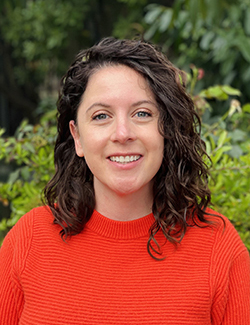
Hollis Jones
Hollis Jones (she/her) is a senior environmental scientist in the Delta Science Program’s Collaborative Science and Peer Review Unit. In this role, she supports the update of the Delta Science Plan and the Social Science Integration Team. She is passionate about advancing collaborative science in the Delta for a more resilient future. Hollis holds a PhD in Ecology from UC Davis, a Master of Science from Louisiana State University, and a Bachelor of Science from Northeastern University.
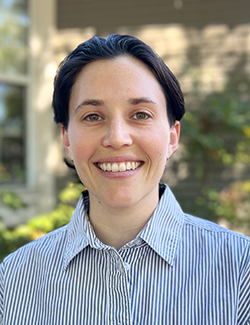
Rachael Klopfenstein
Rachael Klopfenstein (she/they) is the environmental program manager of the Delta Science Program’s Collaborative Science and Peer Review Unit. Part of the Delta Science Program since 2018, Rachael supports collaborative science activities and peer reviews for government science in the Delta. Prior to joining the Council, she worked in invasive species management at the California Department of Fish and Wildlife. Rachael holds a Bachelor of Science in environmental science and management from the University of California, Davis, and a Master of Science in marine resource management from Oregon State University. Outside of work, Rachael enjoys playing soccer, going on outdoor adventures, and spending time with friends and family.