
The Spinning Salmon Program: Science in the Classroom
January 29, 2026
By Becca VanArnam
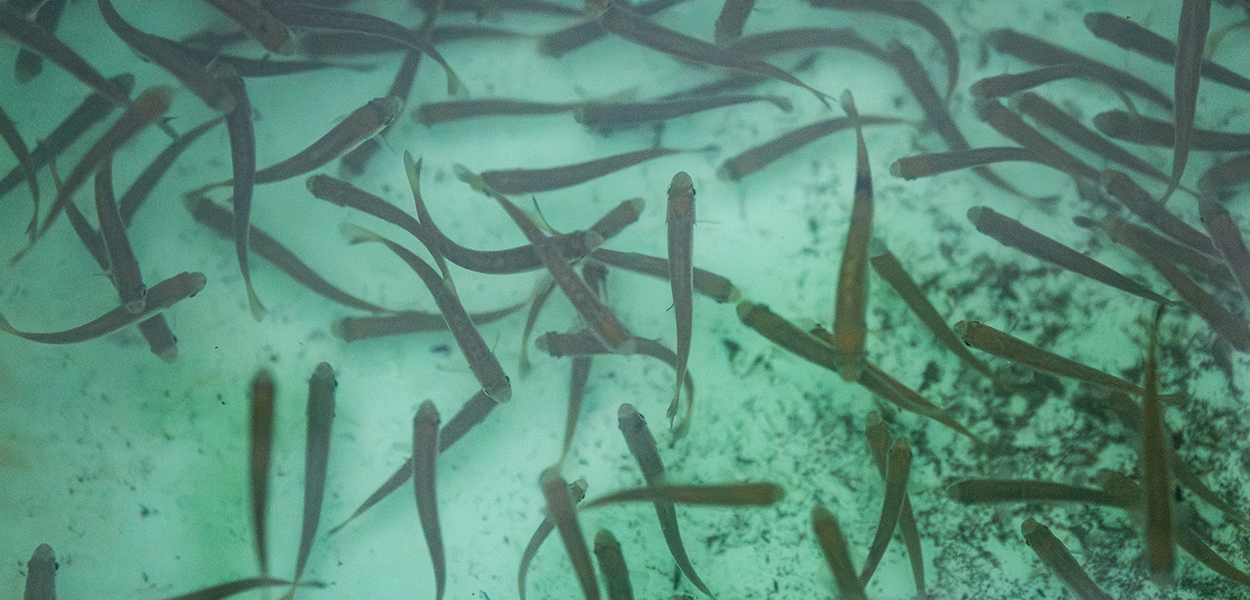
Every fall, thousands of tiny salmon eggs arrive in high school classrooms across Northern California. Students huddle around their tanks, watching closely as the fish hatch, swim, and grow. But this isn’t just about raising fish, it’s about contributing to real science. Through the Spinning Salmon Program, now in its fifth year, over 3,500 students have helped researchers understand thiamine deficiency, a vitamin B1 shortage that can cause strange swimming behavior, including spinning, and low survival in young Chinook salmon.1 Students record observations on the behavior and survival of a control group of young salmon that have not been treated for thiamine deficiency. Because these fish are not typically monitored outside of laboratory settings, students’ data represent an important dataset on non-treated juvenile salmon. Through daily observations and discussion, students connect visible patterns in fish health to broader scientific questions before releasing their fish back into the Sacramento-San Joaquin Delta. This youth-focused community and citizen science (YCCS) program2 has grown into a unique partnership in which classrooms become mini research labs, and students become collaborators in salmon conservation. This raises an important question: What do students gain when they are treated as scientific collaborators rather than just learners?
A New Chapter: Research on Education
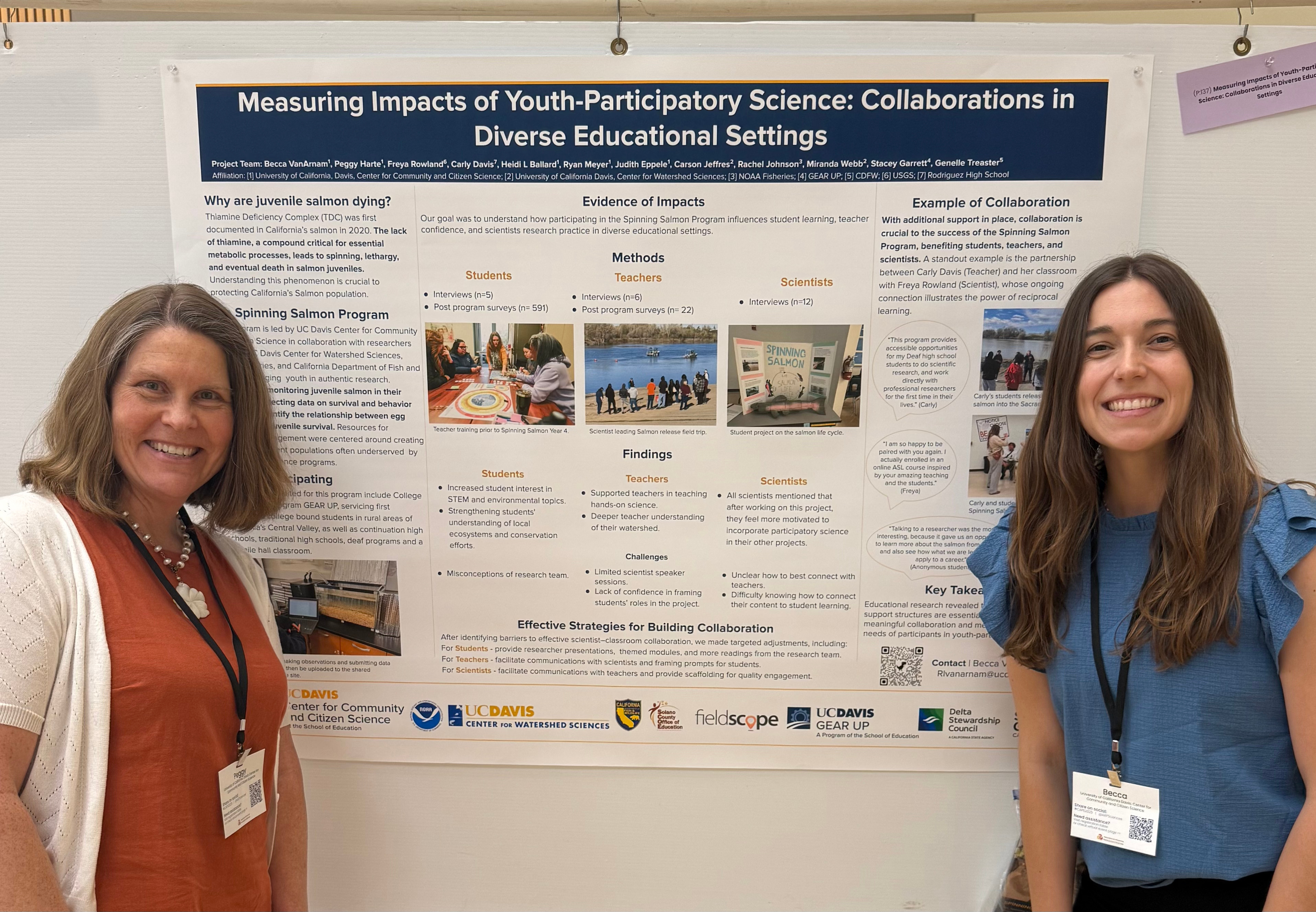
I was selected as a Delta Science Fellow in early 2025. This Fellowship, provided by the Delta Stewardship Council and administered by California Sea Grant, has allowed me to focus on evaluating the educational impact of the Spinning Salmon Program. I am dedicated to answering a big question: What happens when young people living in the Delta region don’t just learn about science, but actively ‘do’ science? To explore this, I’ve added a research component to this program, using surveys and interviews with students and teachers, observing classroom activities, and analyzing how the program is implemented across different schools. Much of my time is spent talking directly with students about their experiences, if and how they see themselves as scientists, what excites them about the work, and what could make it even more engaging.
Although this research is ongoing, several themes are already emerging. For example, we are seeing growth in students’ science identity; students increasingly describe themselves as capable of doing science and recognize their work as contributing to research. Many students report feeling more invested when they understand how their data are used beyond the classroom, particularly in efforts to support salmon health in the Delta. Students have also shared that opportunities to connect the project to their own cultural, family, or community experiences make the science feel more relevant and fun. Teachers describe increased confidence in working with community and research partners in the future. Several educators have shared that participating in the Spinning Salmon Program has helped make partnerships with scientists and external organizations more approachable, making collaboration feel more accessible and worthwhile.
Adding this component creates space for students and teachers to share their perspectives on how to improve the program in the future. By soliciting their feedback, we can better understand not just whether the program “works” in an academic sense, but how it feels in real classrooms and what changes will make it more meaningful. Beyond strengthening the program itself, this research also contributes to a larger body of knowledge on YCCS. These insights can inform best practices for engaging a more diverse population of young people in participatory science, helping other programs design experiences that are not only scientifically rigorous but also inclusive and empowering.
My first year in the program:
Building Relationships
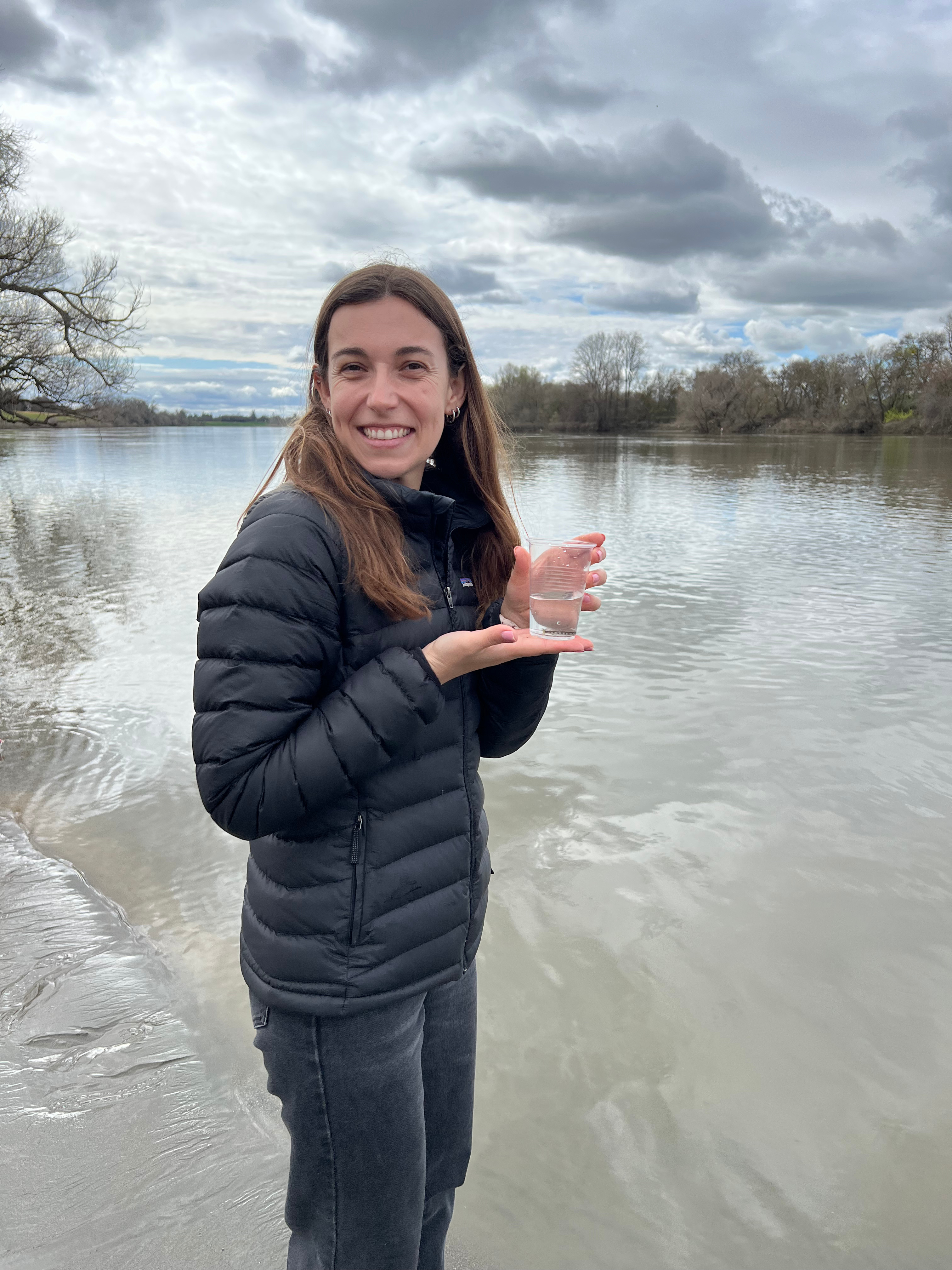
From January to March 2025, I spent time in 11 classrooms across Solano County, getting to know the teachers and students, and attending all of their salmon release field trips. I also conducted surveys, interviews, and classroom observations to measure program impact.
The First Student Showcase
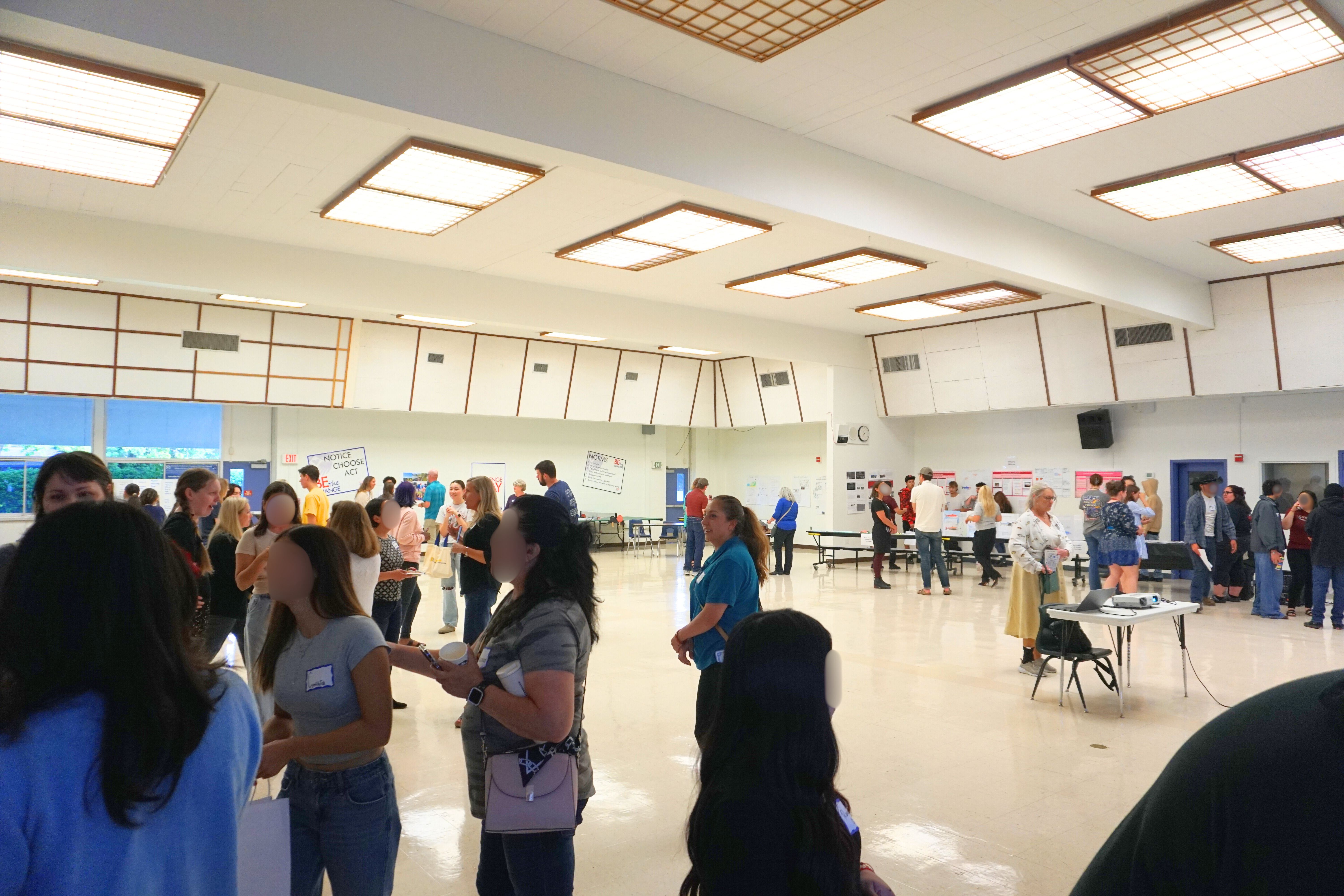
Spring 2025 brought a milestone: the first-ever Spinning Salmon Student Showcase. More than 40 students from Solano County schools transformed an auditorium into a science fair, art gallery, and storytelling space all in one. Families, friends, researchers, and community members joined to see what the students had created, and the students took the mic to share their voices.
Summer Season: Reflecting and Refining
As summer arrived, my focus shifted toward preparing for the 2025-26 school year. I analyzed the educational research data and then brought teachers together for a summer workshop to reflect on what was working well and what could be improved.
The workshop became more than a check-in; it was a space for collaboration. Teachers shared thoughtful feedback and spent time reviewing lessons and suggesting concrete updates that have directly shaped the curriculum revisions for this year. They emphasized 1) adding more hands-on science, 2) deeper cultural connections, 3) stronger data literacy support, along with 4) opportunities for students to see their everyday language as an asset. These priorities echoed what I found in the data collected throughout the school year. Students wanted more opportunities to engage directly with the science beyond collecting salmon data and to better understand how their results fit into the larger project.
What’s on the Horizon?
The story continues this year with a second iteration of the research on the program. This phase of the work is ongoing, and findings shared so far reflect early patterns rather than final conclusions. With modifications in place, I will track how these changes impact the experiences of students and teachers throughout this current school year, with a complete analysis expected by the end of this year. The goal isn’t just to see if the program works, but to gain a better understanding of how it can appeal to a broader, more diverse audience.
Sharing the Story
The excitement hasn’t stopped in the classroom. Over the past year, I, along with the Spinning Salmon team, shared this work at three conferences, sparking conversations with educators, scientists, and policymakers about how YCCS can drive conservation and equity.
From eggs in a classroom tank to conference presentations across the country, the Spinning Salmon Program is showing how science can be hands-on, community-driven, and student-powered. The fish may be the stars of the tanks, but the students, and their stories, are at the heart of the program.
About the Author
Becca VanArnam
Becca is a Delta Science Fellow and a PhD student in the UC Davis School of Education, with over six years of experience as an environmental educator, teaching in both classroom and outdoor settings along the East Coast. Her research examines how youth-focused community and citizen science (YCCS), when combined with culturally sustaining pedagogy, can support emergent bilingual students in developing a sense of belonging in science. She is particularly interested in how these approaches foster students’ science identity by recognizing and building from their linguistic and cultural assets. Becca earned her B.S. in Marine Science & Biology and her B.A. in Spanish from the University of Miami.
1 The Delta Science Program funded foundational research on salmonid thiamine deficiency in 2020, in response to an over-abundance of anchovies in the diets of wild salmon. ↩
2 More information about the Spinning Salmon Program: This program is a collaboration between UC Davis Center for Community and Citizen Science (CCCS), UC Davis Center for Watershed Sciences, the National Oceanic and Atmospheric Administration (NOAA) and the California Department of Fish and Wildlife. The program was originally launched through a partnership with UC Davis’s GEAR UP (Gaining Early Awareness and Readiness for Undergraduate Programs) Rural Valley Partnership. With GEAR UP, this program brought this research opportunity to Glenn, Tehama, and Colusa Counties. The program then expanded through a grant from NOAA to the Solano County Office of Education, and now includes Solano County students. ↩