
15 Years of Delta Reform: Building the Foundations for Future Success
September 22, 2026
By Jessica R. Pearson
Delta Week is a time to honor and elevate the statewide importance of California’s Sacramento-San Joaquin Delta, recognizing the people who steward this special place and the partnerships that will protect it for future generations. The Delta matters to all Californians, whether they know it or not! Thoughtful planning and dedicated resources are necessary to achieve the ambitious goals for the Delta established by the Legislature. As I reflect on the last 15 years, I recall the hard work and determination that have brought us to where we are today, and I acknowledge there is much more to be done to protect the Delta of tomorrow.
A Turning Point in Delta Governance
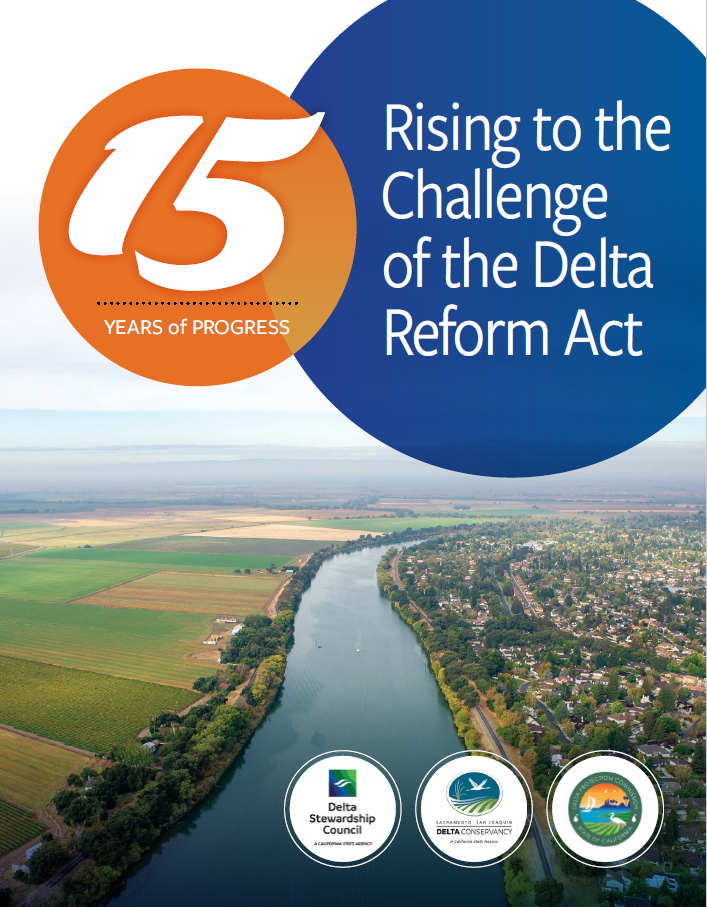
Following the passage of the 2009 Delta Reform Act, the Delta Stewardship Council has worked collaboratively to establish transparent, science-supported governance structures to chart a shared path forward for one of California’s most precious resources. 15 years into implementing the Act, the Delta Stewardship Council, Delta Protection Commission, and Sacramento-San Joaquin Delta Conservancy came together to document collective achievements so far and the need for continued collaboration, funding, and strategic support to address the region’s complex challenges going forward.
We welcome you to read the full report HERE.
The 2009 Delta Reform Act pressed the reset button on governance in the Delta, charting a more intentional path towards long-term success. Before its passage, Delta management was highly fragmented, with authority over land use, flood control, water supply, and habitat restoration scattered across nearly 200 local, state, and federal agencies. A 2005 independent review by the Little Hoover Commission described this structure as “underperforming, unfocused, and unaccountable.” The 2007 Delta Vision Strategic Plan called for a structure with the authority, responsibility, accountability, science support, and funding to achieve key goals for the Delta.
In addition to governance reform, the Legislature established California’s coequal goals for the Delta of water supply reliability and ecosystem health, achieved in a manner that protects the Delta as an evolving place. The new Delta Stewardship Council was tasked with developing the Delta Plan, which serves as the science-based framework and long-term management plan for the region. This work, and the work of the Council’s many partners, has shifted California away from bureaucratic fragmentation and towards a durable future for Delta decision-making grounded in collaboration, public transparency, and the best available science.
A Blueprint for Success
At the center of this work is the Delta Plan – a single, comprehensive blueprint adopted in 2013 that directs federal, state, and local agencies in managing the Delta’s water and environmental resources. It includes enforceable regulations to protect the Delta and recommendations designed to spur action on everything from flood management and land use to water quality and supply. The Plan is not static; we review and update it regularly, so it stays relevant and aligned with current science, policy, and on-the-ground conditions.
The Delta Plan’s 158 performance measures hold the Council and other implementing agencies accountable. These measures are tracked on a publicly accessible interactive dashboard and reviewed annually by the Council as indicators of where management actions are having their desired effect and where attention is needed.
The Delta Plan is legally enforceable. State and local activities identified as “covered actions” must be consistent with the Delta Plan, and public agencies must certify consistency with the Plan’s regulatory policies. This process is transparent and publicly enforced, with any person allowed to appeal a certification of consistency and have their argument heard before the Council.
The Council’s development of the Delta Plan required years of outreach, multi-agency coordination, and collaboration rooted in the best available science and shared goals. In action, the Delta Plan fundamentally increases responsibility and accountability in the Delta, reduces potential harm, and directs the work of agencies to meet a shared set of goals.
Setting the Stage for Science-Based Decision-Making
The Delta Reform Act’s authors doubled down on science. The Act was designed to ensure integration of the best available science so that decision-making is driven by credible, independent, and scientific standards. The Council’s Delta Science Program has followed and built upon best practices from across the nation to establish a trusted science governance structure and fulfill the Legislature’s mandate. The marquis example is the Delta Science Strategy – a set of three guiding documents that together advance our collective understanding of what helps and harms the Delta.
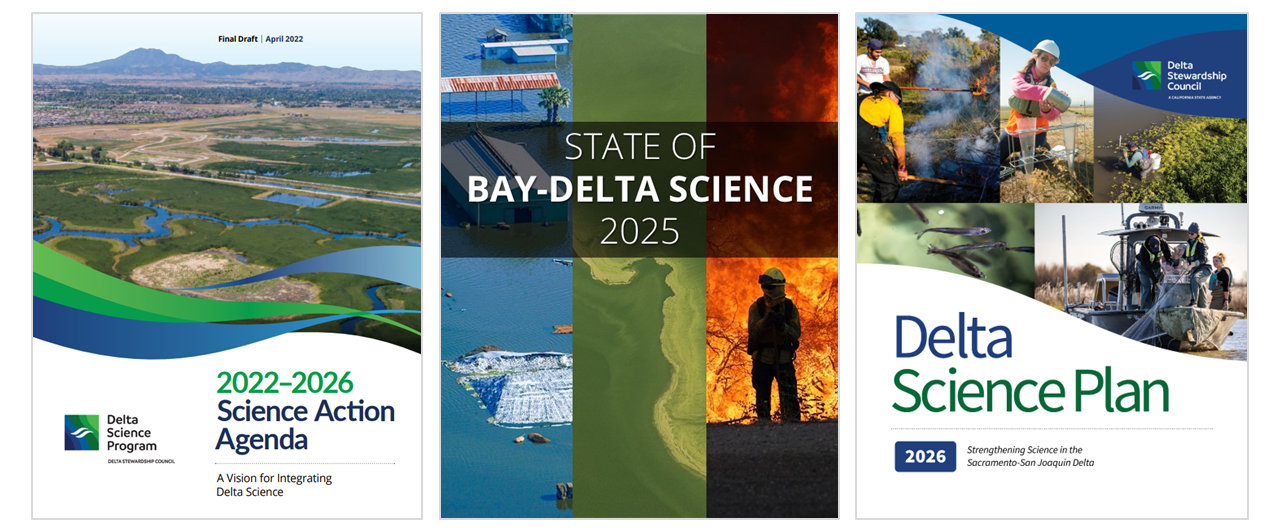
The Council’s Delta Science Program established the Delta Science Strategy to strengthen how science is conducted, shared, and applied across the system. Through the Science Action Agenda, we set clear priorities for collaborative research. Through the State of Bay-Delta Science publication, we periodically synthesize emerging knowledge for decision-makers. And through the Delta Science Plan, we outline best practices, tools, and recommended actions that help ensure Delta science is credible, accessible, and relevant to management.
These three documents are developed collaboratively with the Delta science community and updated periodically to reflect the latest science. The better scientific information we have amid changes to the Delta’s climate, hydrology, and land use, the more likely we are to achieve the ambitious coequal goals set out for us. When we work together on that science, management decisions are made more quickly and with more durable results.
A key part of setting the stage for future success is funding scientific research to increase our capacity for problem-solving and investing in the next generation of scientific experts. The Council’s Delta Science Program has been investing in future knowledge through the Delta Research Awards and Science Fellows Program, and by growing the next generation of scientists through science-policy fellowships. Since 2009, over $54 million in research, fellowships, and long-term studies has been funded by the Delta Science Program to benefit Delta decision-making.
Collaboration Fuels Progress
Effective governance centers on people and relationships, offering frequent opportunities for open discussion among partners and the public. One of the Council’s strengths is how we coordinate across agencies while meaningfully involving the public.
- The Delta Plan Interagency Implementation Committee (DPIIC) brings together leaders from 18 federal and state agencies responsible for implementing the Delta Plan. DPIIC meetings are a forum to align agency actions on issues like restoration funding, harmful algal blooms, Delta levees, climate resilience, and more.
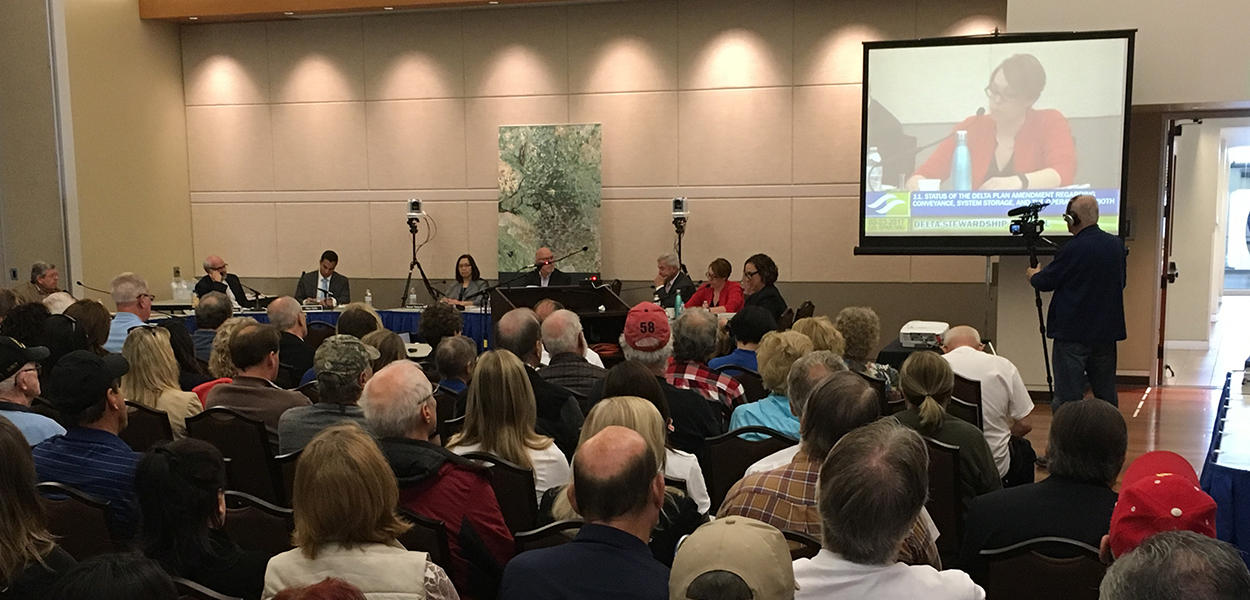
- The Council hosts monthly meetings and multiple workshops where the public can learn about and comment on our recent initiatives and implementation of the Delta Plan. Our staff works hard to ensure that these meetings are engaging, relevant, and spotlight the many partnerships between the Council and other entities working to protect the Delta.
Furthering the Coequal Goals Will Be a Multigenerational Effort
This Delta Week, I am proud of what we have done so far to advance the Delta Reform Act, and I am inspired by the dedication of the Council and our many partners. Stage-setting for success takes time and effort and cannot be taken for granted. Does having strong governance and science structures mean that we have fully achieved the coequal goals after 15 years? No. Can we expect progress during the next 15 years without a strong governance and science foundation underneath us? Also, no.
Achievement of the coequal goals for the Delta will be a multigenerational effort, and the Council has made quiet and steady progress to establish the foundational structures that will ultimately lead us to success. If you aren’t engaged already, we invite you to join us in collaboration to effect foundational change over the next 15 years.
About the Author

About Executive Officer Jessica R. Pearson
Jessica leads a multidisciplinary team in pursuit of the Council’s mission to achieve California’s coequal goals and provide the best possible unbiased scientific information to inform water and environmental decision-making in the Delta. Jessica was selected by the Board as the agency’s executive officer in 2014. Prior to that role, she served the Council as policy and legislative advisor, playing a key role in launching a brand-new state agency and shaping the initial legislatively mandated Delta Plan. Jessica’s career in public service began with her work as a Senate intern and later as a capital fellow; she later served the director of the California Department of Water Resources as an advisor and the California Natural Resources Agency secretary as deputy secretary. She has a degree in communication from the University of California, San Diego, and a Master of Science in community and regional development from the University of California, Davis.