
Delta Independent Science Board Members
The Delta Independent Science Board (Delta ISB) is comprised of 10 members from different disciplines across the United States. The term of office for a Delta ISB member is five years, and a member may serve two terms for a total of 10 years. The Delta ISB is made up of three chairpersons from the Delta ISB membership: The chair, the chair elect, and the past chair. These chairpersons are elected by members of the Delta ISB. Once elected, a Delta ISB member joins the leadership team as the chair elect for two years before becoming the chair, which is also a two-year term. Upon completion of the term as chair, the Delta ISB member serves as past chair for another two years before stepping down from the leadership team.
Delta ISB members are:
Diane McKnight - Chair
Professor in the Department of Civil, Environmental and Architectural Engineering and a Fellow of the Institute of Arctic and Alpine Research at the University of Colorado.
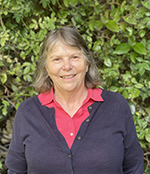
Dr. Diane McKnight began her career with the United States Geological Survey. Her research focuses on the coupling of hydrology, aquatic ecology, and water quality. Dr. McKnight has studied streams, lakes, and wetlands in diverse regions, including the arctic tundra in Alaska, polar desert streams in Antarctica, alpine lakes in the Rocky Mountains, and wetlands in Botswana. She has been president of the American Society of Limnology and Oceanography and editor of Journal of Geophysical Research-Biogeosciences and has served on numerous committees for the National Research Council. She is a fellow of the American Geophysical Union (AGU) and the American Association for the Advancement of Science (AAAS), a member of the National Academy of Engineering, and received the John Dalton Award from the European Geophysical Union. From 2015 to 2018, she served as a program officer with the Arctic Program at the National Science Foundation (NSF). She is currently the chair of the Executive Board of the Long-Term Ecological Research Network. Her first term on the Delta ISB was from September 1, 2020, to August 31, 2025. Her second term on the Delta ISB is from September 1, 2025, to August 31, 2030. See Dr. McKnight’s CV for more details.
Steve Lindley - Chair Elect
Director, National Marine Fisheries Service Southwest Science Center’s Fisheries Ecology Division and Santa Cruz Laboratory (Retired)
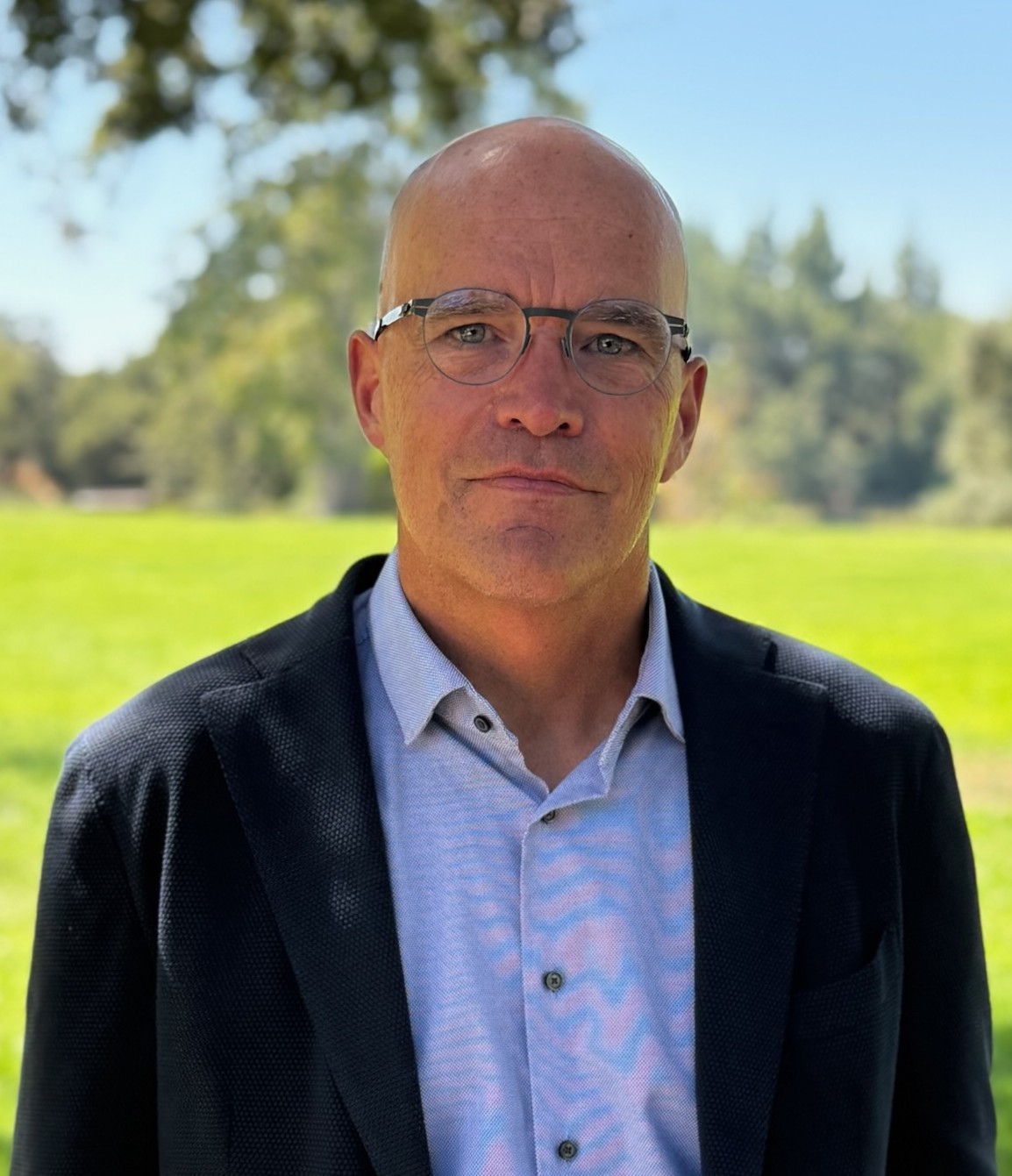
From 2011 to 2025, Dr. Steve Lindley was director of the National Marine Fisheries Service’s Southwest Fisheries Science Center’s Fisheries Ecology Division and Santa Cruz Laboratory, where he oversaw ~100 people working in diverse areas, including fish ecology, aquatic habitats, climate, oceanography, hydrology, geomorphology, genetics, and economics. His own research has focused on connections between many of these fields and the population dynamics of salmon and sturgeon, with the goal of developing and applying quantitative integrated models that can guide decision-making around water management, habitat restoration, and conservation of anadromous fishes. The resulting models have been successfully applied in several biological opinions relating to the design and operations of California’s state and federal water projects and have improved the effectiveness of conservation measures for winter-run Chinook salmon. Throughout his career, he served on a variety of review panels. Dr. Lindley was a member of several biological review teams that synthesized available data to determine the status of salmon and sturgeon populations across the US west coast and led a team of diverse experts in the development of quantitative recovery criteria for Central Valley salmonids. This work resulted in a series of widely cited publications that laid the scientific foundation of salmon conservation under the US Endangered Species Act in California’s Central Valley. Dr. Lindley obtained a Ph.D. in Biological Oceanography from Duke University. His term on the Delta ISB is from September 1, 2025, to August 31, 2030. See Dr. Lindley’s CV for more details.
Inge Werner - Past Chair
Director, Swiss Centre for Applied Ecotoxicology, Dübendorf, Switzerland (Retired)
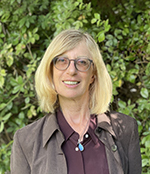
Dr. Inge Werner's area of expertise is ecotoxicology. Her professional experience ranges from academic research in aquatic toxicology to a broad applied approach to risk and impact assessment in both aquatic and terrestrial environments. Dr. Werner recently retired from the Swiss Centre for Applied Ecotoxicology, where she served as Director from 2010 to 2019. The Centre serves as the primary Swiss knowledge hub for research and development, consulting, and further education in ecotoxicology. In Switzerland, she worked closely with federal and local environmental agencies to improve environmental monitoring programs and cooperated in research projects with academic institutions throughout Europe and the United States. Projects included effect-based ecotoxicological assessments of wastewater treatment technologies and comprehensive assessments of environmental risks due to pesticides. Prior to her directorship in Switzerland, she was director of the Aquatic Toxicology Laboratory and Adjunct Professor at UC Davis. She was on the faculty at UC Davis from 1999 to 2010 and worked extensively in the Delta.
She has served on numerous panels and working groups, most recently on the Scientific Advisory Council of the German Federal Institute of Hydrology, which is the primary German institution advising the federal ministries in matters of utilization and management of federal waterways, and the Guidance Committee for the Assessment of Surface Water Resources in Switzerland, which advises decision-makers in all aspects of surface water stewardship. She has a master's degree in limnology from Albert-Ludwig University in Freiburg, Germany, and a Ph.D. degree in aquatic ecotoxicology from Johannes-Gutenberg University in Mainz, Germany. Her term on the Delta ISB is from November 1, 2022, to October 31, 2027. She has published 160 scientific articles. See Dr. Werner’s CV for more details.
Peter Goodwin
Professor Emeritus, University of Maryland Center for Environmental Science
Past President, University of Maryland Center for Environmental Science

Dr. Peter Goodwin served as the President of the University of Maryland Center for Environmental Science, an independent graduate university for the environment within the University System of Maryland (USM) and served as the Vice-Chancellor of Environmental Sustainability for USM. Dr. Goodwin was also Lead Scientist for the Delta Stewardship Council 2012 to 2015. He is the founder and Director Emeritus of the Center for Ecohydraulics Research at the University of Idaho, an interdisciplinary institute working on the simulation of ecological response to management actions or changes in physical processes of rivers, lakes, estuaries and wetlands. Dr. Goodwin has participated in nature-based solutions for river restoration, coastal sustainability, and flood management throughout California, the US and international programs such as the multi-national Patagonian Ecosystems Research Center in Chile. He has undertaken numerous modeling studies of estuarine, coastal and tidal wetland systems, including Mugu Lagoon, San Elijo Lagoon, Venice Lagoon, San Dieguito Lagoon, the Russian River Estuary, Napa Salt Ponds and Delaware Bay. He served as President of the International Association for Hydro-Environment Engineering and Research (IAHR) from 2017-21. From 2024 to 2025, he chaired the Committee for the Review of the Long-term Operations of the Central Valley Project and the State Water Project for the National Academies of Science, Engineering and Medicine. Dr. Goodwin obtained his Ph.D.in Hydraulic and Coastal Engineering from the University of California, Berkeley. His term on the Delta ISB is from October 1, 2025, to September 30, 2030. See Dr. Goodwin’s CV for more details.
Tanya Heikkila
Co-Director, Center for Policy and Democracy; Professor, School of Public Affairs, University of Colorado, Denver
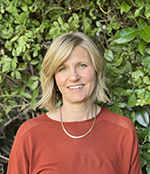
Dr. Tanya Heikkila is a leading scholar in the field of environmental policy and governance and is a professor at the University of Colorado Denver's School of Public Affairs, where she co-directs the Workshop on Policy Process Research. Previously, Dr. Heikkila was an assistant professor at Columbia University’s School of International and Public Affairs (2002 to 2009) and a post-doctoral fellow at Indiana University’s Ostrom Workshop in Political Theory and Policy Analysis (2001 to 2002). Her scholarship focuses on how environmental governance processes can be designed to facilitate collaboration, foster learning, and resolve conflicts. Her research has explored these issues in the context of interstate watersheds, large-scale ecosystem restoration, and unconventional oil and gas development. She has over 100 publications, including six books and over 50 peer-reviewed articles. In addition, she has conducted training workshops for practitioners of environmental governance, served as a member of the Aspen Institute Dialogue on Energy Governance (2016 to 2018), and has taken on various leadership roles in interdisciplinary research programs. She holds an M.P.A. (1996) and Ph.D. (2001) from the University of Arizona. Her first term on the Delta ISB was from September 1, 2020, to August 31, 2025. Her second term on the Delta ISB is from September 1, 2025, to August 31, 2030. See Dr. Heikkila’s CV for more details.
Cathleen Jones
Senior Research Scientist, Jet Propulsion Laboratory, California Institute of Technology
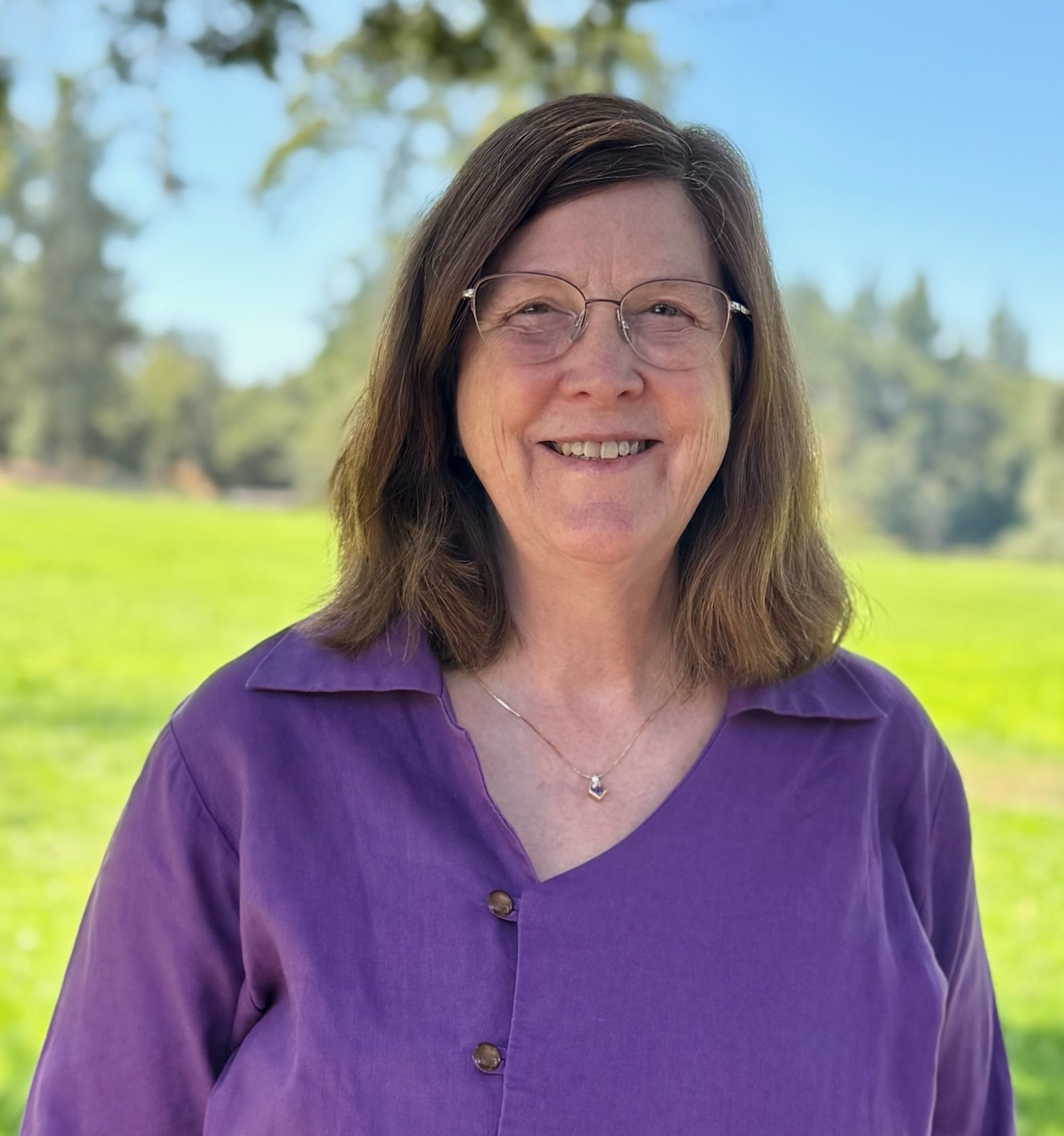
Dr. Cathleen Jones spent two decades working as an experimental nuclear physicist at Argonne National Laboratory and the California Institute of Technology (Caltech) before joining the Radar Science and Engineering Section at Jet Propulsion Laboratory (JPL) in 2004. At JPL, her career interests turned to radar remote sensing using synthetic aperture radar (SAR), working first as a systems engineer during the design and building the Uninhabited Aerial Vehicle Synthetic Aperture Radar (UAVSAR) radar system, then in development of SAR processing algorithms, and most recently in the use of SAR interferometry (InSAR) and polarimetry (PolSAR) for pioneering applications of Earth science techniques to real-world problems. Major geophysical advances include demonstration and refinement on the use of InSAR for measuring land subsidence and more localized surface deformation impacting levees and aqueducts, and research in oil slick detection, tracking, and characterization. Her work with the California Department of Water Resources (DWR) was recognized with the Remote Sensing and Drought Science Service Award from DWR in 2015, and with the Kevin J. Neese Award from the Groundwater Resources Association of California in 2019. Most recently, she is involved in studies of the processes controlling land building in deltas as Deputy Principal Investigator for the Delta-X Earth Venture-Suborbital-3 study (2019-present). She has been an Adjunct Professor in the Dept. of Physics and Technology at The Arctic University of Norway in Tromso since 2016. She has been the NASA-ISRO Synthetic Aperture Radar (NISAR) Science Team Applications lead since 2016 and is the applications lead for the study team formed by NASA to evaluate science and technology needs to advance the 2017 Decadal Survey’s Surface Topography and Vegetation Targeted Observable (2020-2023). She has twice been awarded the NASA Exceptional Achievement Medal. Dr. Jones obtained a Ph.D. and M.S. in Physics from Caltech. Her term on the Delta ISB is from September 1, 2025, to August 31, 2030. See Dr. Jone’s CV for more details.
Anna Michalak
Director, Department of Global Ecology, Carnegie Institution for Science, Stanford, California
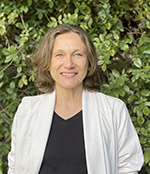
Dr. Anna Michalak’s research interests lie in two areas. The first is assessing the impacts of climate change on inland and coastal water quality via influences on nutrient delivery to and on conditions within water bodies. The second area is understanding and quantifying the cycling and emissions of greenhouse gases at the Earth’s surface at urban to global scales – scales directly relevant to informing climate and policy – primarily through the use of atmospheric observations that provide the clearest constraints at these critical scales. Dr. Michalak’s approach is highly data-driven, with a common methodological thread being the development and application of methods for optimizing the use of limited in situ and remote sensing environmental data. She is the director of the Department of Global Ecology of the Carnegie Institution for Science and a professor in the Department of Earth System Science and the Department of Biology at Stanford University. Previously, she was the Frank and Brooke Transue Faculty Scholar and Associate Professor at the University of Michigan in Ann Arbor, with appointments in the Department of Civil and Environmental Engineering and the Department of Atmospheric Oceanic and Space Sciences.
She holds a Ph.D. and M.S. in Civil and Environmental Engineering from Stanford University and a B.Sc. (Eng.) in Environmental Engineering from the University of Guelph, Canada. She is the lead author of the U.S. Carbon Cycle Science Plan, chair of the Scientific Advisory Board for the European Integrated Carbon Observation System, and member of the National Academies Committee on Earth Sciences and Applications from Space. She has published 139 scientific papers. Her term on the Delta ISB is from November 1, 2022, to October 31, 2027. See Dr. Michalak’s CV for more details.
Jayantha Obeysekera
Director, Sea Level Solutions Center, Institute of Environment, Florida International University, Miami
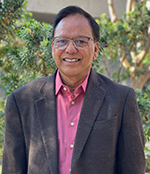
Dr. Jayantha Obeysekera has extensive national and international experience in the planning and management of water resources systems, with particular emphasis on modeling and implications of climate change. Before joining the Florida International University, Dr. Obeysekera managed a large group of hydrologic and environmental modelers, directed the modeling associated with the Comprehensive Everglades Restoration Program and climate change projections, and helped establish the Interagency Modeling Center at the South Florida Water Management District. He has served as a member of several committees of the National Academy, including those associated with the Sustainable Water & Environmental Management in California Bay-Delta, California Bay Delta Conservation Plan, Edwards Aquifer in Texas, and the Klamath River in Oregon. He was a member of the federal advisory committee that directed the development of the 2014 National Climate Assessment and co-authored several sea-level rise projections reports published by the National Oceanic and Atmospheric Administration. He was also a member of the Coastal Assessment Regional Scenario Working Group associated with the Department of Defense in the United States. Currently, he serves as a director of the Sea Level Solutions Center at Florida International University.
He holds a bachelor’s degree in civil engineering from the University of Sri Lanka, M. Eng. from the University of Roorkee, India, and a Ph.D. in Civil Engineering from Colorado State University. He has co-authored over 70 research articles in numerous peer-reviewed journals. He is a recipient of the 2015 Norman Medal of the American Society of Civil Engineers for a technical paper that makes a definitive contribution to engineering. His term on the Delta ISB is from June 1, 2022, to May 31, 2027. See Dr. Obeysekera’ CV for more details.
Kenneth Rose
France-Merrick Professor in Sustainable Ecosystem Restoration, Horn Point Laboratory, University of Maryland Center for Environmental Science
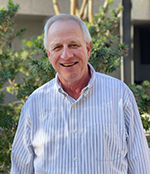
Dr. Kenneth Rose is the France-Merrick Professor in Sustainable Ecosystem Restoration at Horn Point Laboratory of the University of Maryland Center for Environmental Science. Prior to coming to UMCES, Dr. Rose was a professor at Louisiana State University and a research staff member at Oak Ridge National Laboratory. His research centers on using mathematical and computer simulation modeling to predict and better understand fish population and food web dynamics in estuaries, lakes, reservoirs, and oceans. He has been a member of multiple steering and advisory committees providing scientific guidance and oversight, including for the National Science Foundation, California Delta Science Program, United States GLOBEC Program, and US Army Corps of Engineers. Recently, Dr. Rose served as a member of the National Academy of Sciences’ Committees on Sustainable Water and Environmental Management in the California Bay-Delta, Evaluating the Effectiveness of NOAA’s (Fisheries) Stock Rebuilding Plans, Review of the Edwards Aquifer Habitat Conservation Program, and Effective Monitoring to Evaluate Ecological Restoration in the Gulf of Mexico. Dr. Rose was recently awarded the Award of Excellence (for lifetime achievement) from the American Fisheries Society. His term on the Delta ISB is from January 15, 2024, through January 14, 2029. See Dr. Rose’s CV for more details.
Lisa Wainger
Research Professor, University of Maryland Center for Environmental Science
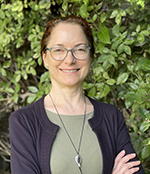
Dr. Lisa Wainger researches the optimal design of environmental restoration investments using a suite of ecological and economic models to evaluate costs, benefits and risks of options and to identify incentive changes that could motivate action. Dr. Wainger pioneered techniques to include land spatial configuration into economic valuation and wetland mitigation policy. She is also known for work developing economically based non-monetary benefit indicators to improve the representation of tradeoffs in natural resource decision-making. As a research professor at an interdisciplinary research center, University of Maryland Center for Environmental Science, Chesapeake Biological Laboratory, she has published widely on water quality, invasive species management, ecosystem service valuation, aquaculture, and commercial and recreational fishing, among other topics. She received her Ph.D. (environmental and ecological economics) from the University of Maryland, College Park and her B.S. (earth science) from the University of California, Santa Cruz. She serves on multiple science advisory boards to governmental and non-governmental organizations and is past chair of the Scientific and Technical Advisory Board to the Chesapeake Bay Program partnership. Her first term on the Delta ISB was from September 1, 2020, to August 31, 2025. Her second term on the Delta ISB is from September 1, 2025, to August 31, 2030. See Dr. Wainger’s CV for more details.
Former Delta ISB Members:
- Dr. Brian Atwater, United States Geological Survey, 2010-2017
- Dr. Stephen Brandt, Oregon State University, 2014-2024
- Dr. Elizabeth Canuel, The College of William & Mary, 2010-2020
- Dr. James Cloern, United States Geological Survey, 2020-2021
- Dr. Tracy Collier, Puget Sound Partnership (Retired), 2010-2020
- Dr. Harindra Joseph Shermal Fernando, University of Notre Dame, Notre Dame, Indiana, 2012-2022
- Dr. Virginia Dale, University of Tennessee, 2020-2025
- Dr. Michael Healey, University of British Columbia, 2010-2012
- Dr. Thomas Holzer, United States Geological Survey, 2017-2024
- Dr. Edward Houde, University of Maryland, 2010-2013
- Dr. Jay Lund, University of California, Davis, 2012-2022
- Dr. Judith Meyer, University of Georgia, 2010-2014
- Dr. Jeff Mount, University of California, Davis, 2010-2012
- Dr. Robert Naiman, University of Washington, 2020-2025
- Dr. Richard Norgaard, University of California, Berkeley, 2010-2020
- Dr. Vince Resh, University of California, Berkeley, 2010-2020
- Dr. John Wiens, Colorado State University. 2010-2020
- Dr. Joy Zedler, University of Wisconsin, Madison, 2015-2020